

- Article
- Related
In the annals of history, the value of road construction sometimes gets overlooked.
As a species, we marvel at the Pyramids of Giza, are awed by the beauty of Renaissance cathedrals, and an all-glass skyscraper so tall it experiences different weather at its “summit” versus ground level, also garners nods of appreciation and accomplishment.
But roads?
Often, they receive collective indifference. We use and rely on them without considering their global impact. Or the heavy equipment and precision measurement required to lay thousands of kilometers of asphalt.
That indifference stops with the talented personnel at BOMAG, India Pvt Ltd, the Indian arm of BOMAG, a globally renowned German manufacturer of road construction and compaction equipment, part of the FAYAT Group, a large international engineering and construction equipment group based in France.
BOMAG India: The ‘Heroes’ of Heavy Equipment
Founded in 2018, BOMAG India’s range of heavy equipment includes soil compactors, tandem rollers, pneumatic rollers, asphalt compactors, stabilizers, and milling machines. These machines are commonly seen at road construction sites, airports, industrial parks, and large infrastructure projects.
With a manufacturing facility near Pune, Maharashtra, the Chakan plant supports export markets and operates in alignment with global quality and manufacturing standards.
Known for strong engineering and precision manufacturing, the company emphasizes reliable performance, fuel efficiency, and long service life. One of its key strengths is compaction measurement technology, such as systems that help operators achieve the right level of compaction the first time—saving time, fuel, and materials.
Handheld 3D Scanning: A Precision Measurement Must
Recently, the company sought a new approach in how it performed its dimensional inspection capabilities for the large and complex fabricated and machined components used in heavy equipment.
The 3D scanning system complements existing quality assurance methods and is applied based on inspection requirements and component characteristics. Prior to implementing the FARO CREAFORM solution, inspection activities relied on conventional contact-based and manual measurement techniques.
These approaches presented limitations such as:
- Restricted measurement coverage on large components
- Longer inspection lead times
- Dependence on multiple setups and operator technique
- Limited ability to capture complete surface geometry
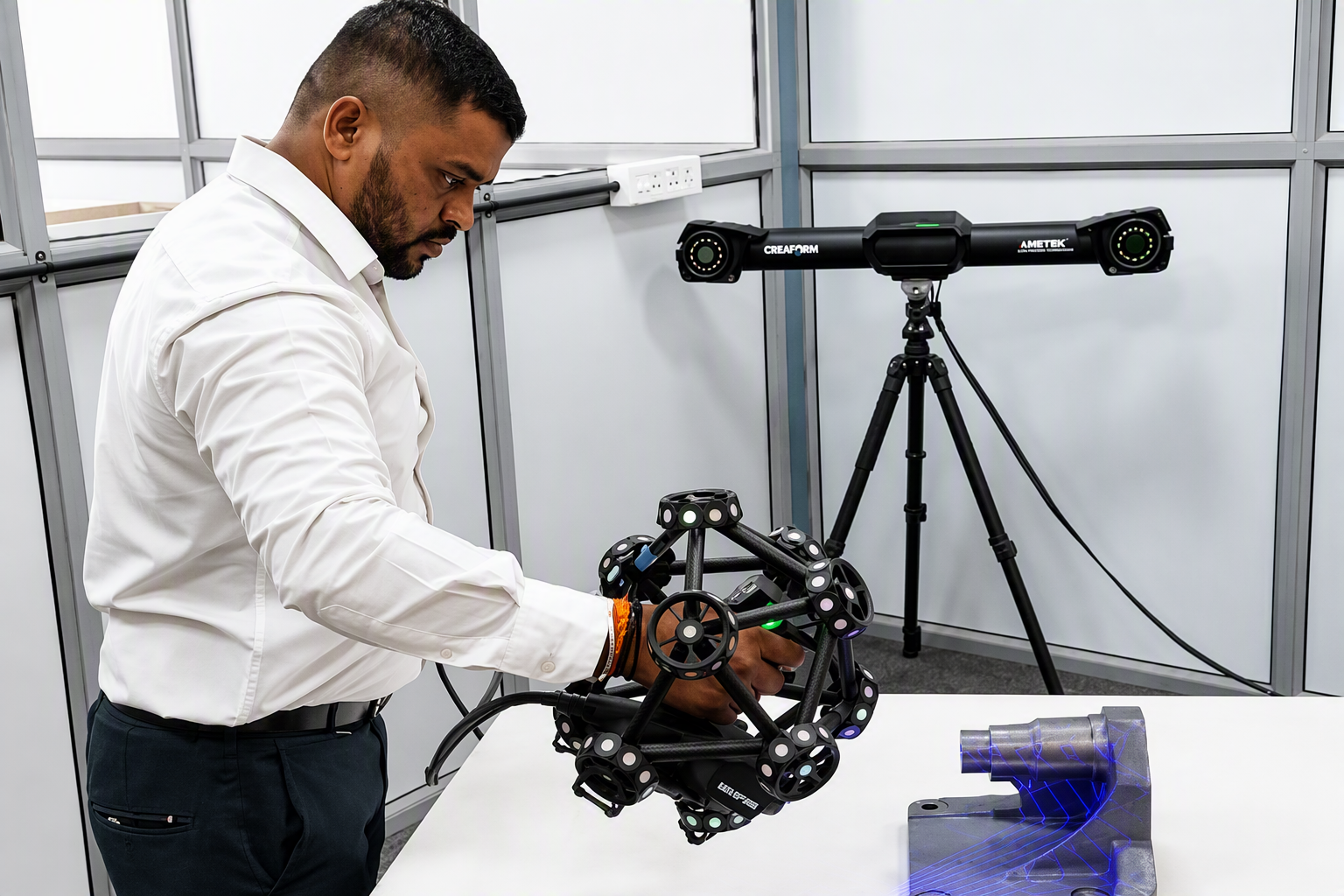
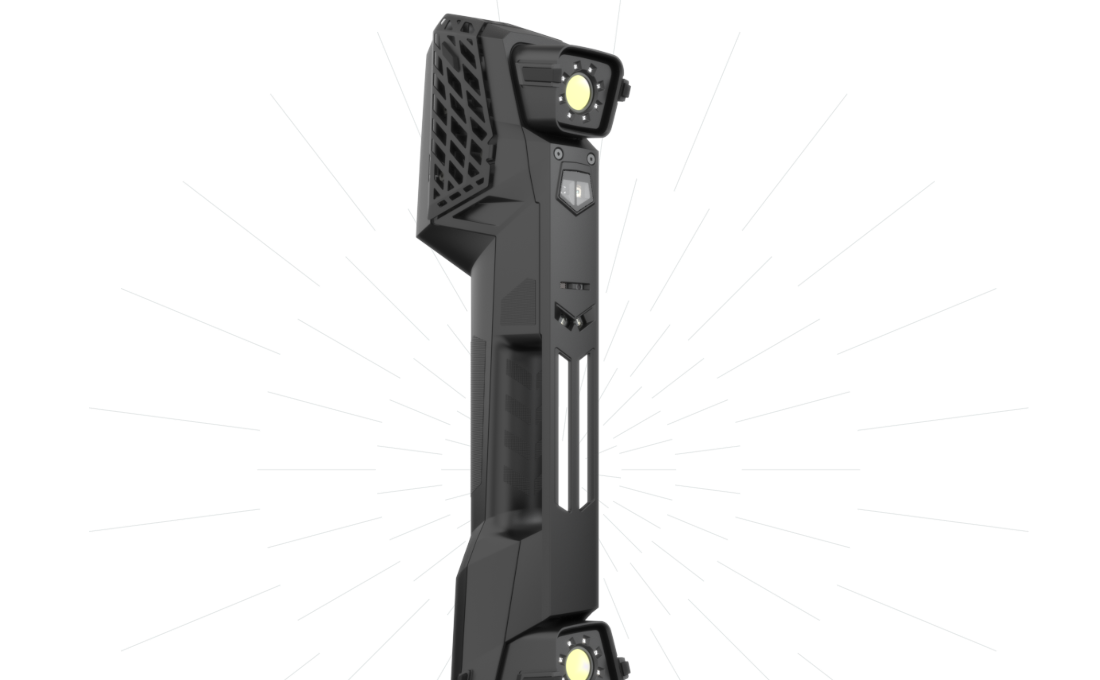
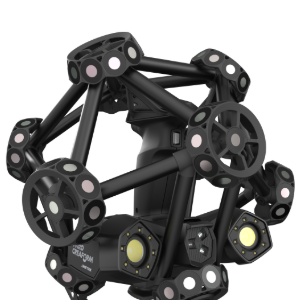
These constraints prompted the move toward a non-contact inspection solution, the MetraSCAN 3D system together with officially licensed FARO CREAFORM software modules. Selected for their ability to deliver accurate, repeatable measurements in production environments without extensive part setup and maximized ease-of-use on the shop floor, the BOMAG team adapted quickly to the new approach.
Impervious to shop floor vibrations, part movement, and environmental instability, the MetraSCAN 3D system increases the efficiency, reliability, and versatility of measurement processes and is optimized to perform metrology-grade measurements and 3D surface inspections on a large variety of parts regardless of size, material, finish, or complexity.
“Adopting this inspection approach significantly improved our inspection processes, shifting it from a bottleneck to a competitive advantage on the shop floor,”
“It’s given our teams the confidence to make faster decisions, standardize best practices, and scale inspection alongside production demands.”
-Manager of Process Quality.
.jpg?h=1029&la=en&w=2284&revision=95fba1eb-870c-4d3b-9e07-a3054fdcc30e&hash=42740CC365EFC4DC5D416140DB630B6D)
Dimensional Inspection Defined
Dimensional inspection is an essential quality control process used to measure the physical dimensions of a part or product and check whether they meet specified tolerances. Typically, it involves measuring dimensions like length, height, width, diameter, angles and surface features.
Failure to ensure manufacturing equipment components meet established specs risks numerous downstream impacts – defects that could lead to equipment breakdown, and cost overruns.
While traditional measurement tools like calipers, micrometers, height gauges and coordinate measuring machines (CMM) continue to do their jobs well, in some situations handheld 3D scanning is proving more adept at acquiring better data, faster. And with a versatility of use case and in-process inspection that older methods struggle to match.
This is where the MetraSCAN 3D system proved most effective. Thanks to that reduced learning curve and shop-floor versatility, the handheld scanner proved highly effective at:
- Taking reliable measurements in production environments
- Reducing inspection lead time
- Improving detection of dimensional deviations
- Generating consistent and repeatable/reproduceable results
- Creating digital inspection records for support traceability
- De-siloing communication channels between quality, production, and engineering teams
Whether deployed in fabrication and welding areas, machining and assembly zones, or typical shop-floor conditions including ambient temperature variation and routine production activity, MetraSCAN 3D performed well as the above benefits supported cost savings through reduced rework and improved process stability.
“This experience clearly changed and improved our practices and processes, and not just in inspection, but across quality, production, and supplier management,” added another BOMAG employee. “FARO CREAFORM and specifically MetraSCAN 3D has enabled greater collaboration, earlier issue detection, and more consistent decision‑making throughout the entire manufacturing lifecycle.”
A Critical Role in India’s Future Growth
As India (and the world) continues to invest heavily in its highways, urban development, and industrial infrastructure, heavy equipment companies like BOMAG India play a crucial, if understated role helping build the strong foundations that modern roads and cities depend on.
It’s a foundation with equally strong historical roots. Just as today’s megacities and megalopolis regions depend on well-made, long-lasting, efficient roads and manufacturing equipment, so too, did societies and civilizations of thousands of years ago.
After all, all nations, ancient or modern, require an efficient and extended road network to sustain both their social development and economic competitiveness. That’s true for the DC Beltway (I-495), the trans-Canada Highway (Highway 1), the UK’s M1, or India’s Mumbai-Pune Expressway, which includes India’s widest road tunnel, reducing travel time by 25 minutes.
Recent trends bear this demand out: need for road infrastructure continues to grow, with global spending on road transport infrastructure accounting for roughly $1.2 trillion in 2024 and projected to reach up to $2.2 trillion by 2030, with a CAGR of 10.9%. Moreover, developing economies continue to grow as well, with Asia leading the pack.
Road, Rail, Infrastructure, and Everything in Between
It is this transforming infrastructure-dependent world, that BOMAG India will continue to help engineer, both at home and abroad – literally from the ground, up. And with precision measurement solutions providers like FARO CREAFORM at the helm, future collaboration with the BOMAG team seems likely in the years ahead.
“Based on the overall experience, BOMAG India views advanced 3D scanning as a valuable tool for ongoing and future inspection requirement,”
“Going forward we will consider 3D laser scanning a strategic investment to support scalable operations, higher standards of consistency, and evolving quality expectations across the manufacturing and equipment subspecialties we represent.”
-Ravindra Baraskar.
Published 08/05/2026