

- Article
- Related
The decision is made—no change for now. The new HandySCAN 3D EVO Series™ will have to wait. After all, the existing measuring tools seem to be doing their job—well enough, at least.
Yes, everyone seems reasonably satisfied, and everything seems perfectly acceptable. The measuring devices work. They’ve worked for years. They still capture data, still generate inspection reports, and still help technicians keep production moving. Yet beneath this reassuring sense of continuity lies a different reality—one built on compromises so ingrained that they often go unnoticed.
This blog explores the hidden costs that surface when accuracy declines, versatility is limited, inspection workflows remain inefficient, and teams lack the support required to work at their full potential.
Accuracy: The First Hidden Cost
Verified Accuracy Through ISO Standards
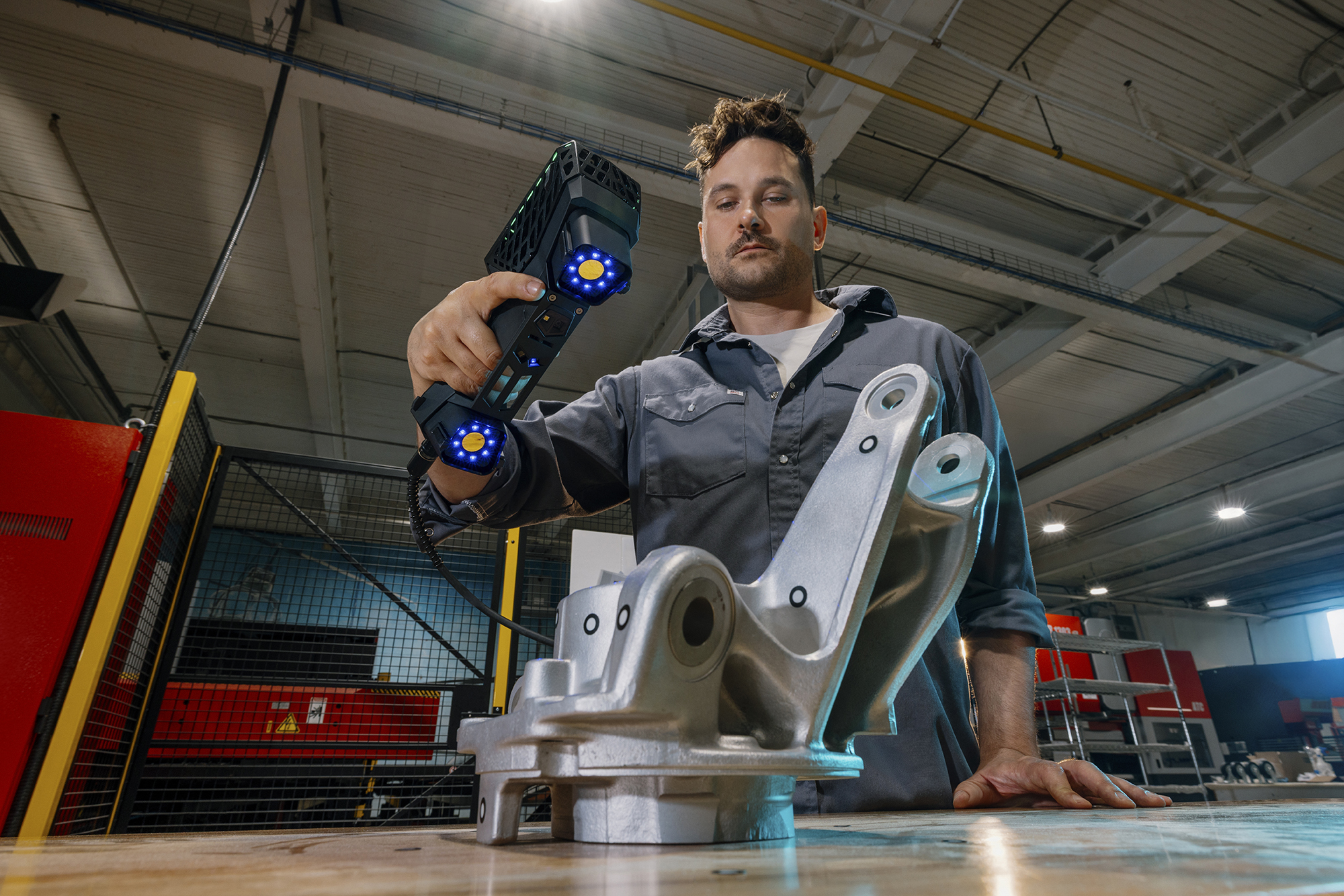
By not choosing the EVO Series, measurement accuracy continues to depend on stated specifications—numbers claimed by the manufacturer, not validated by ISO 10360 testing or ISO 17025 accreditation. Stated accuracy provides an estimate of performance; accredited accuracy provides proof.
The EVO Series delivers accuracy that is both ISO 10360-certified and ISO 17025-accredited, backed by the most rigorous acceptance tests in the industry. It does not simply claim to be accurate—its performance is independently verified and documented.
Consequently, sticking with legacy tools means accepting a margin of uncertainty that can quietly erode confidence in every inspection result that follows.
Mobility and Stability for Shop-Floor Measurements

Declining the EVO Series also means continuing to work with tools that struggle to match real-world conditions. Laptops, cables, and fragile calibration rigs still need to be moved around the production floor—introducing instability, vibration sensitivity, and setup variability that directly affect accuracy.
Shop-floor-ready technology removes these weak points. The EVO Series is purpose-built for mobility and real-world conditions. Lightweight, ergonomic, and capable of self-calibrating in real time, it maintains accuracy where it matters most: on the shop floor, near vibrations, and in tight spaces.
Legacy systems may perform well on paper or in ideal conditions, but accuracy that degrades the moment you step onto the shop floor becomes an operational cost that few companies fully measure.
Versatility: The Limits That Slow Everything Down
Scanning Performance on Challenging Materials
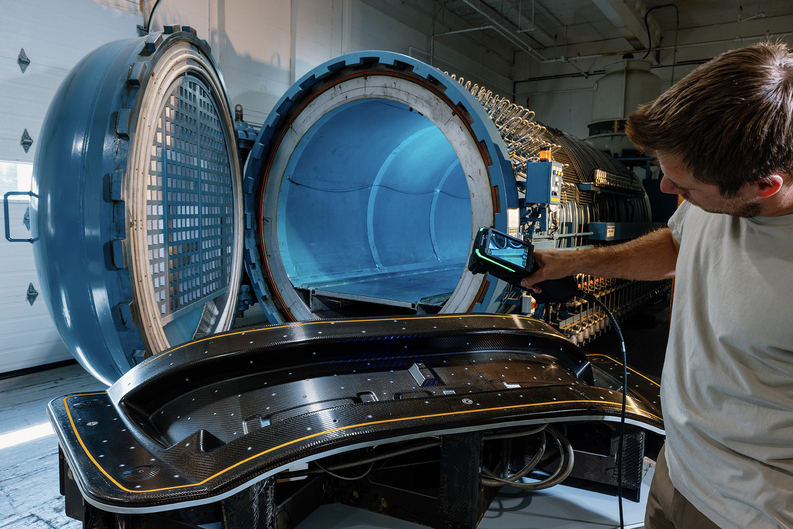
Without the EVO Series, scanning reflective, shiny, or high-contrast surfaces still requires workarounds—spraying powder, preparing parts, and slowing down the workflow to avoid misreads. These additional steps introduce variability, extend inspection times, and depend heavily on technicians’ ability to fine-tune the setup.
The EVO Series removes these constraints entirely. Creaform’s blue laser technology, perfected over years of development, captures high-quality data on difficult surface finishes without surface treatment or part preparation.
This level of versatility ensures accurate, detailed scans in the most challenging conditions—no prep, no powder, no compromise.
Inspection Efficiency: Where Legacy Tools Hurt the Most
Integrated Photos, Annotations, and AR Visualization
Without the EVO Series, documenting inspections still requires a mix of external cameras, screenshots, manual annotations, and extra post-processing steps. These disconnected tools slow down reporting and leave room for inconsistencies.
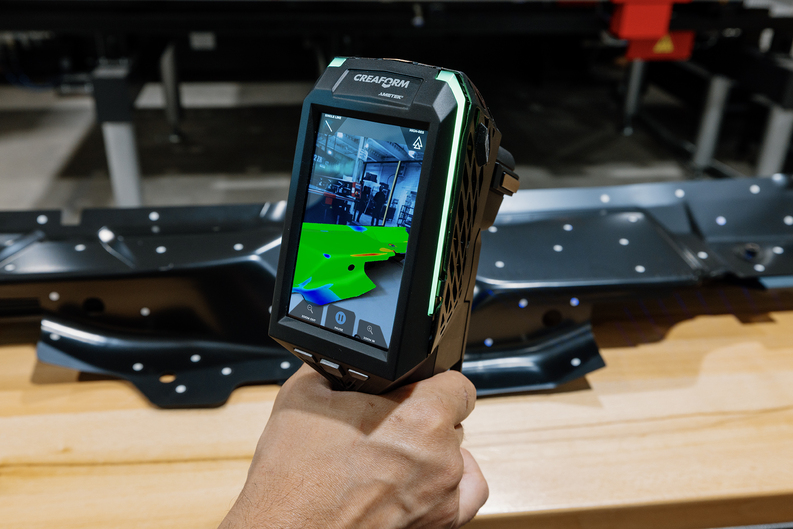
With the EVO Series, photos are captured directly during the scan and automatically linked to their exact locations on the part. Colormaps can be projected directly onto the part (with augmented reality), giving operators and engineers an intuitive view of deviations as they appear. Documentation becomes faster, clearer, and inherently more reliable.
Purpose-Built Tool for Sheet-Metal Parts
Edges, holes, oblongs, cut-outs, flanges, or tabs remain difficult to measure with traditional measuring tools. Their limitations often result in longer scanning times, incomplete coverage, or uncertainty about whether the data is accurate enough.
The EVO Series integrates seamlessly with the Sheet Metal add-on, part of the Creaform Metrology Suite, providing operators with intuitive density indicators that confirm full coverage during scanning. This ensures accurate edge detection and overall measurement accuracy—exactly where sheet-metal applications demand it.
Team Support: The Human Cost of Legacy Tools
Faster Onboarding, Less Friction
With legacy tools, onboarding new operators is often slow, fragmented, and frustrating. Training requires jumping between software, teaching workarounds, and trying to compensate for the tool’s lack of real-time visualization.
The EVO Series changes that dynamic. Its embedded screen provides live visualization, density indicators, and AR guidance directly on the 3D scanner—turning training into an intuitive, plug-and-play experience instead of a plug-and-pray process. Teams ramp up faster, with fewer questions and far less coaching.
Responsive, Knowledgeable Support
When technical support doesn’t speak your language—literally or operationally—every issue becomes a delay. Callback cycles, translated emails, and unclear troubleshooting drain teams’ productivity.
Creaform’s global support network eliminates that burden. With specialists covering eight languages across sixteen offices and resolving 97% of cases with 4- or 5-star satisfaction, technicians receive timely, knowledgeable assistance that helps them stay efficient and confident.
Investment: The Long-Term Cost of Standing Still
Selecting a measurement solution is ultimately an investment in long-term capability. Legacy systems remain fixed in place—static hardware, aging software, and limited room to evolve.
The EVO Series takes a fundamentally different path. As part of an evolutive software platform, it continuously benefits from new features, optimized algorithms, and seamless updates, ensuring that performance improves rather than stagnates.
From the First HandySCAN 3D to the EVO Series
Behind this solution stands Creaform, a company that has been redefining industrial metrology since 2005. With the launch of the HandySCAN 3D twenty years ago—the world’s first portable, self-positioning laser 3D scanner —Creaform pioneered the handheld 3D scanning category and fundamentally changed how 3D measurements could be performed on the shop floor.
That same engineering philosophy—bringing metrology-grade accuracy out of the lab and into real-world environments—has guided every HandySCAN 3D generation since. Designed and manufactured in Canada, supported by two decades of engineering expertise, and trusted by more than 10,000 customers worldwide, the EVO Series represents more than a tool. It reflects a long-standing commitment to accuracy, reliability, and sustained innovation that continues to shape the direction of portable 3D metrology.
Where Legacy Ends and Innovation Begins
So the question returns:
Continue relying on legacy measuring tools?
Or advance with the HandySCAN 3D Serie EVO™—the most accurate, intuitive, and future-ready portable 3D scanner in its class?
In a world without the EVO Series, inspection workflows would still depend on stitched scans, powder application, and uncertain accuracy.
But the EVO Series now exists. And with its capabilities now in plain view, the decision speaks for itself.
Published 03/16/2026